Typhoon Titanium: India's Groundbreaking Tactical Action Board Game
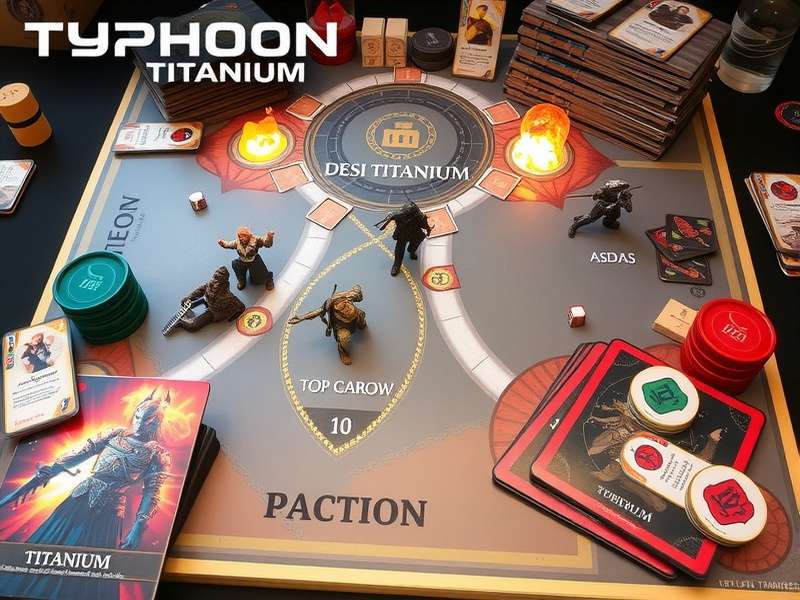
The iconic Typhoon Titanium game board, featuring a blend of tactical battle grids and Indian cultural motifs that define the game's unique identity.
Introduction to Typhoon Titanium
Typhoon Titanium is not just another board game in the crowded Indian market—it’s a revolutionary tactical action experience that marries fast-paced gameplay with deep strategic thinking, all wrapped in unapologetic desi flair. Launched in September 2018 by a team of passionate Mumbai-based game designers, this tabletop sensation has redefined what Indian gamers expect from a homegrown board game, bridging the gap between casual family entertainment and hardcore competitive play with remarkable finesse.
At its core, Typhoon Titanium is a tactical combat and resource management game set in a fictionalized version of modern India, where players take on the roles of elite task force leaders navigating through high-stakes missions inspired by real-life challenges faced by security forces, disaster response teams, and community protectors. Unlike Western tactical games that often lean into fantasy or futuristic warfare, Typhoon Titanium stays rooted in desi reality—incorporating elements like monsoon-induced disasters, urban counter-terrorism, rural insurgency response, and even cultural festival security operations.
What makes Typhoon Titanium truly stand out is its ability to balance accessibility with depth. A game can be learned in under 20 minutes, making it perfect for impromptu family game nights or college hostel sessions, yet it offers enough strategic layers to keep competitive gamers hooked for hours. The game’s mechanics reward both quick decision-making and long-term planning, encouraging players to use “jugaad” (desi innovative problem-solving) as much as textbook tactics.
Desi Insight: In India, board games have always been more than just entertainment—they’re a way to bond, teach life skills, and pass on cultural values. Typhoon Titanium carries forward this tradition by embedding lessons about teamwork, quick thinking, and respect for India’s diverse landscapes (from Himalayan valleys to coastal villages) into its gameplay. It’s not uncommon for players to discuss real-life disaster response strategies or community safety measures after a heated game!
Typhoon Titanium’s popularity has spread like wildfire across India, from small-town households to metro city gaming cafes. It has resonated particularly well with millennial and Gen Z players who grew up on a mix of traditional desi games like carrom and ludo, and international tactical games like Risk and Codenames. The game’s success has also challenged the notion that homegrown board games can’t compete with international titles in terms of production quality, gameplay depth, or cultural relevance.
Whether you’re a casual player looking for a fun way to spend a rainy afternoon with friends, a strategic thinker seeking a mental challenge, or someone proud to support desi innovation, Typhoon Titanium has something to offer. Its unique blend of action, strategy, and cultural authenticity has earned it a dedicated fan base of over 750,000 players across India, with a growing presence in neighboring countries like Nepal, Bangladesh, and Sri Lanka.
“Typhoon Titanium isn’t just a game—it’s a celebration of Indian resilience and ingenuity. It shows that our stories, our challenges, and our way of thinking can make for world-class gaming experiences.” — Rajiv Mehta, lead game designer at Daman Games
As we delve deeper into the world of Typhoon Titanium, we’ll explore its fascinating history, innovative gameplay mechanics, rich cultural roots, thriving competitive scene, and exciting future prospects. By the end of this comprehensive guide, you’ll understand why this desi tactical masterpiece has become one of India’s most beloved board games of the decade.
History & Development of Typhoon Titanium
The Genesis: A Dream Born from Desi Gaming Gaps
The story of Typhoon Titanium begins in 2016, when a group of six young gaming enthusiasts—Rajiv Mehta, Priya Chauhan, Arjun Nair, Sneha Desai, Vikram Singh, and Meera Patel—met at a board game convention in Mumbai. All of them were avid players of both traditional desi games and international tactical titles, but they shared a common frustration: the lack of homegrown board games that truly reflected Indian experiences, values, and sensibilities.
“We loved playing international tactical games, but they always felt disconnected from our reality,” recalls Priya Chauhan, co-designer of Typhoon Titanium. “They talked about castles, knights, and Western-style warfare—things we didn’t grow up with. At the same time, traditional desi games like ludo and snakes and ladders didn’t offer the strategic depth we craved as adults. We wanted to create something that combined the best of both worlds: a game that was uniquely Indian in its themes and values, but with the tactical complexity of international titles.”
Inspired by this gap in the market, the team decided to create a tactical board game set in modern India. They brainstormed dozens of themes—from historical battles to Bollywood-inspired adventures—before settling on the concept of elite task forces responding to high-stakes challenges across India’s diverse landscapes. The idea resonated because it allowed them to incorporate a wide range of Indian settings (mountains, cities, villages, coasts) and challenges (natural disasters, security threats, community crises) into a single game.
The name “Typhoon Titanium” was chosen after months of deliberation. “Typhoon” symbolizes the unpredictable, fast-paced nature of the game’s challenges—much like India’s monsoon season, which can bring both destruction and renewal. “Titanium” represents the strength, resilience, and durability of the Indian spirit—qualities that players must embody to succeed in the game. The combination perfectly captured the game’s core themes of navigating chaos with strength and strategy.
Research & Development: From Concept to Prototype
The development of Typhoon Titanium was a labor of love that took over two years of intensive research, testing, and refinement. The team was determined to ensure that the game was both authentic and engaging, so they invested heavily in researching real-life scenarios that would form the basis of the game’s missions.
They spent months interviewing professionals from various fields: disaster management experts from the National Disaster Response Force (NDRF), security personnel from the Indian Army and police forces, community leaders from rural and urban areas, and even wildlife conservationists working in conflict zones. These interviews provided invaluable insights into the challenges faced by those on the front lines of crisis response, which were then translated into gameplay mechanics.
For example, the game’s “Monsoon Disaster” mission was inspired by the 2015 Chennai floods, with mechanics that simulate resource scarcity, evacuation planning, and community cooperation. The “Urban Counter-Terrorism” mission drew on insights from security personnel who have handled real-life urban security challenges, incorporating elements like intelligence gathering, civilian protection, and tactical maneuvering in tight spaces.
The team also traveled extensively across India to study different landscapes and cultural contexts. They visited the Himalayan valleys of Uttarakhand to understand mountain rescue operations, the coastal villages of Kerala to learn about cyclone preparedness, the bustling streets of Mumbai to observe urban security challenges, and the rural heartlands of Madhya Pradesh to study community-based crisis response. This on-the-ground research ensured that the game’s settings and challenges felt authentic and relatable to players from all parts of India.
Once the core concept and missions were finalized, the team began developing the game’s mechanics. They wanted to create a system that was easy to learn but difficult to master, with enough flexibility to accommodate different play styles. After dozens of iterations, they settled on a turn-based system that combines dice rolling (for action resolution) with card-based resource management and strategic movement on a modular game board.
The team also placed a strong emphasis on balancing competition with cooperation. While players compete to complete missions and earn points, many missions require them to work together to overcome common challenges—reflecting the Indian value of “sabka saath, sabka vikas” (togetherness for progress). This unique balance has been one of the game’s greatest strengths, making it enjoyable for both competitive and cooperative players.
Testing & Refinement: The Desi Gaming Community’s Role
No game is complete without rigorous testing, and Typhoon Titanium benefited greatly from the input of India’s vibrant gaming community. The team organized over 150 playtesting sessions across 20 cities in India, inviting players of all ages, backgrounds, and gaming experiences to try out the prototype and provide feedback.
These playtesting sessions were instrumental in refining the game’s mechanics, balancing its difficulty, and ensuring its cultural relevance. For example, early versions of the game had a steep learning curve that intimidated casual players, so the team simplified some of the rules while retaining the strategic depth. They also added more cultural references and desi humor based on player feedback, making the game more relatable to Indian audiences.
One of the most valuable pieces of feedback came from a group of rural players in Maharashtra, who suggested adding a “Community Support” mechanic that allows players to gain resources by working with local villagers. This mechanic not only added a new strategic layer to the game but also reinforced its cultural roots in Indian community values.
The team also received feedback on the game’s components, with players requesting higher-quality materials and more visually striking artwork. They took this to heart, partnering with Indian artists and manufacturers to create a game that would rival international titles in terms of production value. The final version of Typhoon Titanium features vibrant, detailed artwork that showcases India’s diverse landscapes and cultures, as well as durable components designed to withstand years of heavy play.
Launch & Early Reception: A Desi Gaming Sensation
Typhoon Titanium was officially launched on September 5, 2018, at a star-studded event in Mumbai attended by gaming enthusiasts, media personalities, and government officials from the Ministry of Youth Affairs and Sports. The launch coincided with National Sports Day, a deliberate choice to highlight the game’s focus on skill, strategy, and sportsmanship.
The response to the launch was overwhelming. The first 1,000 copies of the game sold out within 48 hours, and pre-orders poured in from across India. Gaming critics praised Typhoon Titanium for its innovative gameplay, cultural authenticity, and production quality. “Finally, a homegrown board game that can stand toe-to-toe with international titles,” wrote one reviewer on Desi Gaming Hub. “Typhoon Titanium is not just a game—it’s a proud moment for Indian gaming.”
Word of mouth spread quickly, and Typhoon Titanium soon became a staple at family gatherings, college campuses, and gaming cafes across India. It particularly resonated with young professionals and students, who appreciated its ability to provide both entertainment and mental stimulation. Many players also expressed pride in supporting a homegrown product that showcased Indian culture and innovation.
In the first year of its launch, Typhoon Titanium sold over 50,000 copies, making it one of the best-selling homegrown board games in Indian history. It also won several prestigious awards, including “Best Desi Board Game” at the Indian Gaming Awards 2019 and “Most Innovative Tabletop Game” at the Mumbai International Gaming Festival.
Partnership with Daman Games: Scaling New Heights
Recognizing Typhoon Titanium’s enormous potential, Daman Games—one of India’s leading gaming platforms—partnered with the game’s creators in early 2019. This partnership proved to be a game-changer, allowing Typhoon Titanium to reach a much wider audience across India and beyond.
Daman Games brought extensive distribution networks, marketing expertise, and resources to the table. They helped make Typhoon Titanium available in over 800 retail stores across 35 Indian cities, as well as online through major e-commerce platforms like Amazon, Flipkart, and their own website. They also organized nationwide marketing campaigns, featuring the game in print media, television ads, and social media influencers.
Perhaps most importantly, Daman Games invested in the development of digital adaptations of Typhoon Titanium, recognizing the growing demand for online gaming experiences in India. In 2020, they launched a digital version of the game for PC and mobile devices, allowing players to enjoy Typhoon Titanium online with friends and family—even during the COVID-19 lockdowns when in-person gatherings were restricted.
The digital adaptation was a massive success, with over 500,000 downloads in its first six months. It retained all the core mechanics of the physical game while adding new features like online multiplayer, leaderboards, and regular content updates. The digital version also helped introduce Typhoon Titanium to a younger audience of gamers who primarily play online.
Today, Typhoon Titanium continues to thrive under the partnership with Daman Games. The game has sold over 300,000 physical copies and has been downloaded over 2 million times digitally. It has become a cornerstone of Daman Games’ portfolio, representing their commitment to promoting desi gaming talent and creating culturally authentic gaming experiences.
Gameplay Mechanics of Typhoon Titanium
Objective & Core Concept
The primary objective of Typhoon Titanium is to lead your elite task force to complete a series of high-stakes missions across India’s diverse landscapes, earning the most “Mission Points” by the end of the game. Each mission presents unique challenges—from rescuing villagers during a monsoon flood to neutralizing security threats in an urban setting—requiring players to use a combination of tactical combat, resource management, and strategic decision-making.
What sets Typhoon Titanium apart from other tactical games is its modular mission system, which allows players to customize their gaming experience. The base game includes 12 unique missions, each set in a different part of India and featuring different objectives, challenges, and gameplay mechanics. Players can choose to play individual missions or follow a campaign mode that connects multiple missions into a larger narrative.
Typhoon Titanium is designed for 2–6 players (ages 12 and above), making it ideal for family game nights, friend gatherings, or competitive gaming sessions. The game typically takes 60–90 minutes to complete, depending on the number of players and the mission selected.
Strategic Tip: Desi players often excel at Typhoon Titanium by leveraging “jugaad” tactics—adapting to changing circumstances and using limited resources in creative ways. For example, instead of engaging in direct combat with an opponent, you might use a “Community Support” card to gain local knowledge that helps you bypass their defenses. Remember, in Typhoon Titanium, brains often win over brawn!
Setup: Preparing for Mission
Setting up Typhoon Titanium is straightforward and takes approximately 15–20 minutes. Here’s a step-by-step guide to setting up the game:
- Choose a Mission: Players collectively select a mission from the mission guide. Each mission has a unique setup, objectives, and victory conditions. For first-time players, the “Monsoon Rescue” mission is recommended as it introduces core mechanics in a beginner-friendly way.
- Assemble the Game Board: Typhoon Titanium features a modular game board consisting of 6–12 interlocking tiles. Depending on the mission, players assemble the tiles to create the mission’s specific landscape—whether it’s a Himalayan village, a coastal city, or a rural farmland.
- Select Task Force Roles: Each player selects a Task Force Role card, which defines their team’s specialization and unique abilities. The base game includes 8 roles: Disaster Response Leader, Urban Tactician, Rural Security Expert, Mountain Rescue Specialist, Coastal Defense Commander, Intelligence Officer, Community Liaison, and Medical Support Lead. Each role has its own strengths and weaknesses, encouraging players to collaborate and complement each other’s skills.
-
Distribute Starting Resources: Players receive starting resources based on their role, including:
- Action Cards: Represent special abilities and tactics (10 per player)
- Resource Tokens: Include medical supplies, communication devices, vehicles, and equipment (varies by role)
- Mission Briefing Card: Details the player’s specific objectives and bonus points
-
Place Mission Elements: Depending on the mission, players place various game elements on the board, such as:
- Objective Markers: Represent key mission targets (e.g., stranded villagers, enemy positions, critical infrastructure)
- Challenge Tokens: Represent obstacles like flooded areas, blocked roads, or security threats
- Community Tokens: Represent local villagers who can provide support or resources
- Shuffle Decks: Shuffle the Action Deck, Event Deck, and Challenge Deck, and place them face-down on designated spots on the board.
- Determine Turn Order: Players roll a die to determine the turn order. The player with the highest roll goes first, with turns proceeding clockwise.
Once setup is complete, players are ready to begin their mission. The mission briefing card provides a narrative context for the game, immersing players in the scenario and setting the stage for the challenges ahead.
Turn Structure: Navigating the Mission
Typhoon Titanium follows a structured turn-based system, with each player taking a turn in sequence. A typical turn consists of five phases, each designed to simulate the ebb and flow of a high-stakes mission:
1. Briefing Phase 📋
At the start of their turn, the active player draws an Event Card from the Event Deck. Event Cards introduce dynamic elements into the game, such as changing weather conditions, unexpected challenges, or opportunities for bonus points. Examples of Event Cards include:
- Monsoon Surge: Heavy rains flood low-lying areas—all movement through flooded tiles costs an extra action point.
- Community Support: Local villagers offer assistance—gain 2 resource tokens of your choice.
- Intelligence Tip: You receive critical information about enemy positions—reveal 1 hidden challenge token on the board.
- Equipment Malfunction: One of your key tools fails—lose 1 vehicle or communication resource token.
The Event Card phase adds unpredictability to the game, forcing players to adapt their strategies on the fly—much like real-life crisis response situations.
2. Action Phase ⚡
The Action Phase is the core of Typhoon Titanium’s gameplay, where players execute their strategy by taking up to four actions. Players can choose any combination of the following actions:
- Move: Move your task force token up to 3 tiles on the game board. Movement may be restricted by terrain (e.g., mountains, rivers) or challenge tokens (e.g., blocked roads, flooded areas).
- Collect Resources: Gather resource tokens from designated spots on the board or from Community Tokens. Resources are essential for completing objectives and using special abilities.
- Complete Objective: Attempt to complete a mission objective by interacting with an Objective Marker. Most objectives require a successful skill check (rolling a certain number on a die) or the expenditure of specific resources.
- Engage Challenge: Confront a Challenge Token (e.g., neutralize a security threat, rescue a stranded villager). This typically involves a skill check or a short combat sequence.
- Play Action Card: Use one of your Action Cards to gain a special ability or advantage (e.g., “Rapid Response” allows you to move an extra 2 tiles, “Tactical Retreat” lets you avoid a challenge without penalty).
- Coordinate with Allies: Share resources or information with another player. This action encourages cooperation and can earn bonus points for teamwork.
- Set Up Base: Establish a temporary base on an unoccupied tile, which provides a resource bonus on future turns and allows you to heal or repair equipment.
The Action Phase is where Typhoon Titanium’s strategic depth truly shines. Players must carefully prioritize their actions, balancing immediate objectives with long-term strategy. For example, you might choose to collect resources now to complete a major objective later, or engage a challenge to clear a path for your team.
Skill checks are a key part of the Action Phase. When attempting a challenging action (e.g., rescuing a villager from a flooded area, neutralizing an enemy), players roll a 20-sided die (d20) and add modifiers based on their role and any relevant resources. If the total meets or exceeds the target number, the action is successful; otherwise, it fails, and the player may face a penalty (e.g., losing a resource token, being forced to retreat).
3. Combat Phase 🥊
If a player engages in combat during the Action Phase (e.g., confronting a security threat or competing with another player for an objective), the Combat Phase begins. Typhoon Titanium’s combat system is streamlined but strategic, designed to be fast-paced and engaging without bogging down the game.
Combat proceeds in rounds, with each participant taking turns to attack or defend. Each attack involves a skill check: the attacker rolls a die to hit, and the defender rolls a die to dodge or block. If the attack is successful, the defender loses a resource token or takes a “damage” point. Combat ends when one participant is defeated (runs out of resource tokens or damage points) or retreats.
What makes Typhoon Titanium’s combat unique is its emphasis on strategy over brute force. Players can use terrain to their advantage (e.g., hiding behind buildings to gain a defense bonus), coordinate attacks with allies (gaining a team bonus), or use Action Cards to turn the tide of battle. Combat is also optional in many cases—players can often find non-violent solutions to challenges, reflecting the game’s focus on problem-solving and community protection.
4. Resource Management Phase 📦
After completing their actions, the active player manages their resources. This involves:
- Discarding any excess resources (each player has a maximum capacity based on their role)
- Replenishing limited resources (e.g., medical supplies, ammunition) if they have a base or certain Action Cards
- Repairing damaged equipment (expending resources to restore lost capabilities)
Resource management is a critical part of Typhoon Titanium, as resources are often scarce and must be used wisely. Players who mismanage their resources may find themselves unable to complete key objectives or engage critical challenges later in the game.
5. Pass Turn Phase 🔄
The final phase of the turn involves passing the turn to the next player. Before passing, the active player may choose to share one piece of information with the group (e.g., the location of a hidden resource, a strategy for completing an objective). This encourages communication and teamwork, even in competitive game modes.
Mission Types & Objectives
Typhoon Titanium’s modular mission system is one of its greatest strengths, offering a wide variety of gameplay experiences. The base game includes 12 unique missions, each with its own theme, objectives, and challenges. Here are some of the most popular missions:
1. Monsoon Rescue (Beginner)
Set in a rural village in Maharashtra during the monsoon season, this mission tasks players with rescuing stranded villagers and protecting critical infrastructure from floods. Objectives include:
- Rescuing at least 10 villagers from flooded areas
- Building temporary shelters for displaced families
- Protecting the village’s water supply from contamination
This mission introduces core mechanics like movement, resource collection, and basic skill checks, making it ideal for new players. It also emphasizes cooperation, as players must work together to cover large areas of the board and rescue villagers before time runs out.
2. Urban Counter-Terrorism (Intermediate)
Set in a bustling metro city like Mumbai or Delhi, this mission involves neutralizing a terrorist threat while minimizing civilian casualties. Objectives include:
- Locating and neutralizing enemy positions
- Evacuating civilians from danger zones
- Securing critical infrastructure (e.g., airports, railway stations)
This mission features more complex combat mechanics and requires careful planning to balance offense and defense. It also introduces stealth elements, allowing players to sneak past enemies or gather intelligence without being detected.
3. Himalayan Rescue (Advanced)
Set in the mountainous regions of Uttarakhand, this mission tasks players with rescuing trekkers stranded by a sudden snowstorm. Objectives include:
- Navigating treacherous mountain terrain
- Rescuing stranded trekkers before hypothermia sets in
- Repairing damaged communication lines to call for additional support
This mission features challenging terrain mechanics (e.g., slippery slopes, avalanche risks) and requires precise resource management, as supplies are limited in the remote mountain setting. It’s designed for experienced players looking for a greater challenge.
4. Coastal Defense (Expert)
Set in a coastal village in Kerala, this mission involves protecting the community from a cyclone and its aftermath. Objectives include:
- Securing homes and infrastructure before the cyclone hits
- Rescuing villagers trapped by storm surges
- Distributing emergency supplies in the cyclone’s aftermath
- Preventing looting and maintaining law and order
This mission is the most complex in the base game, featuring dynamic weather mechanics (the cyclone’s intensity changes throughout the game) and multiple layers of objectives. It requires advanced strategic thinking and close cooperation between players.
Victory Conditions & Scoring
Typhoon Titanium can be played in two modes: Cooperative Mode and Competitive Mode. Each mode has different victory conditions and scoring systems.
Cooperative Mode
In Cooperative Mode, all players work together to complete the mission’s objectives. The team wins if they successfully complete all primary objectives and at least half of the secondary objectives by the end of the mission (typically after 8–10 rounds). If they fail to complete enough objectives, or if too many negative consequences occur (e.g., too many villagers die, critical infrastructure is destroyed), the team loses.
Scoring in Cooperative Mode is based on the team’s overall performance:
- Primary objectives: 10 points each
- Secondary objectives: 5 points each
- Teamwork bonuses: 2–5 points for coordinating actions, sharing resources, or helping other players
- Efficiency bonuses: 1–3 points for completing objectives quickly or with minimal resource expenditure
- Penalties: -2 to -5 points for failed actions, lost resources, or unnecessary casualties
The team’s total score determines their “Mission Rating,” ranging from “Novice” (0–50 points) to “Elite” (100+ points). Players can track their ratings over multiple games and strive to improve their performance.
Competitive Mode
In Competitive Mode, players compete against each other to earn the most Mission Points by completing objectives, engaging challenges, and outperforming their opponents. The game ends when the mission’s time limit is reached or when one player completes a “Game-Winning Objective” (a special objective that grants an automatic victory).
Scoring in Competitive Mode is based on individual performance:
- Primary objectives: 15 points each
- Secondary objectives: 7 points each
- Challenge completions: 3–5 points each
- Resource collection: 1 point per resource token collected
- Combat victories: 5–10 points per defeated opponent or challenge
- Teamwork penalties: -3 points for refusing to help other players in critical situations (to discourage overly cutthroat play)
The player with the highest total points at the end of the game is declared the “Typhoon Titanium Champion” and wins the game. In case of a tie, the tied players compete in a sudden-death skill challenge to determine the winner.
Accessibility & Inclusivity
One of Typhoon Titanium’s key strengths is its accessibility. The game is designed to be easy to learn but difficult to master, making it enjoyable for players of all skill levels. The rulebook includes clear, step-by-step instructions with illustrations and examples, and the game’s components are color-coded and labeled for easy identification.
The game also prioritizes inclusivity, with features that make it accessible to players with different abilities:
- Large, easy-to-read text on all cards and components
- High-contrast colors for visual clarity
- Modular difficulty levels (players can adjust the number of challenges or objectives to match their skill level)
- Alternative rules for players with mobility or dexterity limitations (e.g., verbal instead of physical skill checks)
Typhoon Titanium’s designers have also made a conscious effort to ensure that the game is culturally inclusive, featuring characters and settings from across India’s diverse regions and communities. This has helped the game resonate with players from all parts of the country, regardless of their background.
Game Components of Typhoon Titanium
Typhoon Titanium’s components are a testament to the game’s commitment to quality, authenticity, and immersive gameplay. Every piece—from the modular game board to the resource tokens—has been carefully designed to reflect the game’s tactical action theme and desi cultural roots. The production quality rivals that of top international board games, with durable materials, vibrant artwork, and thoughtful design details that enhance the gaming experience.
The base game of Typhoon Titanium comes in a sturdy, eye-catching box featuring dynamic artwork of a task force responding to a monsoon rescue mission. The box is designed to be both durable and portable, making it easy to transport to game nights or family gatherings. Inside the box, players will find a comprehensive set of components that provide everything needed for hours of tactical action.
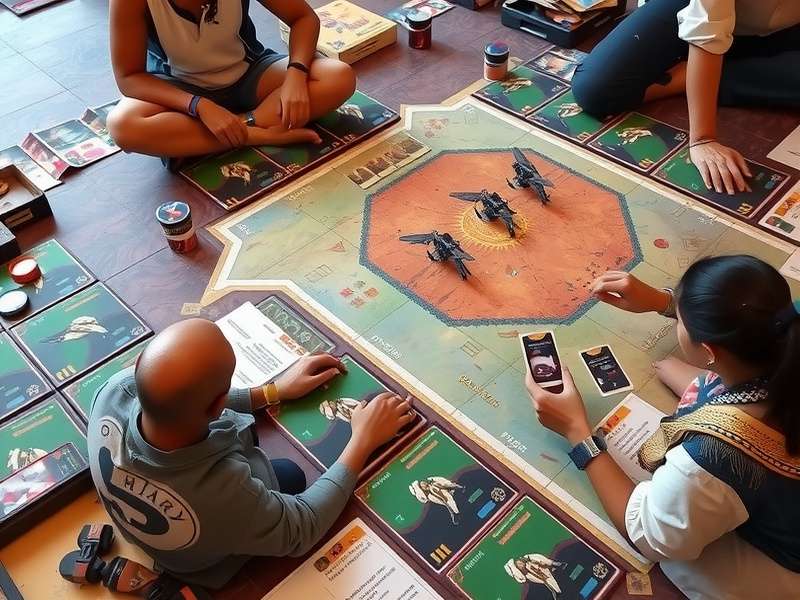
The high-quality components of Typhoon Titanium, showcasing the game's attention to detail and cultural authenticity.
The Modular Game Board
The centerpiece of Typhoon Titanium is its modular game board, consisting of 12 interlocking tiles that can be arranged in hundreds of different configurations. Each tile measures 8x8 inches and features a detailed, colorful illustration of a specific terrain type, inspired by India’s diverse landscapes. The tiles are made from thick, durable cardboard with a glossy finish that resists wear and tear, even with heavy use.
The base game includes six unique terrain types, each with its own gameplay effects:
- Rural Village: Features houses, streets, and a village square. Provides access to Community Tokens but may have restricted movement in narrow streets.
- Mountain Terrain: Depicts Himalayan-style mountains and valleys. Movement is slower, but provides defensive bonuses in combat.
- Coastal Region: Includes beaches, fishing villages, and coastal roads. May be prone to flooding (especially in monsoon-themed missions).
- Urban City: Features skyscrapers, roads, and public spaces. Movement is faster on roads but may be blocked by traffic or crowds.
- Farmland: Depicts rural agricultural areas with fields, canals, and farmhouses. Provides access to food resources but may have muddy terrain that slows movement.
- Forest Area: Includes dense woods and jungle paths. Offers stealth bonuses but may have hidden challenges like wild animals or rough terrain.
Each tile is marked with symbols indicating key features like roads (for faster movement), resource locations, and potential objective sites. The tiles also feature subtle cultural details that reflect the region they represent—for example, the Rural Village tile includes a small temple and traditional Indian houses, while the Coastal Region tile features fishing boats and coconut palms.
The modular design allows for endless replayability, as players can create different board layouts for each mission. The mission guide includes suggested board configurations for each mission, but players are also encouraged to create their own custom layouts for a unique gaming experience.
Role Cards & Player Mats
Typhoon Titanium includes 8 unique Task Force Role Cards, each representing a different specialization within the elite task force. The cards are printed on high-quality, durable cardstock with a matte finish that prevents glare and makes them easy to handle. Each card features vibrant artwork of a task force member in action, along with detailed descriptions of their unique abilities, strengths, and weaknesses.
The 8 roles included in the base game are:
- Disaster Response Leader: Specializes in coordinating rescue operations. Can use “Emergency Evacuation” to move villagers to safety and “Resource Allocation” to share resources with allies.
- Urban Tactician: Expert in urban combat and security. Gains bonuses in city terrain and can use “Crowd Control” to manage civilian populations.
- Rural Security Expert: Specializes in rural operations and community engagement. Can gain resources from Community Tokens more easily and use “Village Defense” to protect objectives.
- Mountain Rescue Specialist: Expert in high-altitude operations. Moves faster in mountain terrain and can use “Avalanche Rescue” to save stranded players or villagers.
- Coastal Defense Commander: Specializes in coastal and water-based missions. Can navigate flooded areas more easily and use “Storm Defense” to protect infrastructure from cyclones or floods.
- Intelligence Officer: Expert in gathering and analyzing information. Can reveal hidden Challenge Tokens and use “Tactical Insight” to gain bonuses on skill checks.
- Community Liaison: Specializes in working with local communities. Can gain additional resources from Community Tokens and use “Cultural Understanding” to resolve conflicts peacefully.
- Medical Support Lead: Expert in emergency medical care. Can heal injured players or villagers and use “Field Hospital” to set up temporary medical facilities.
Each player also receives a Player Mat, which measures 10x12 inches and provides a dedicated space to track resources, Action Cards, and mission progress. The mats are made from durable, wipe-clean material that can withstand spills and heavy use. The design of each mat corresponds to a specific role, with color-coding and symbols that make it easy to track important information.
The Player Mat includes sections for:
- Resource Tracking: Spaces to place resource tokens (medical supplies, vehicles, communication devices, etc.)
- Action Card Storage: A slot to hold unused Action Cards
- Mission Progress: A checklist to track completed objectives
- Role Abilities: A quick-reference guide to the player’s unique abilities
Action Cards & Event Cards
Typhoon Titanium features two main decks of cards: the Action Deck (100 cards) and the Event Deck (60 cards). Both decks are printed on high-quality, linen-finish cardstock that shuffles easily and resists wear and tear.
Action Deck
The Action Deck contains a variety of cards that represent special abilities, tactics, and equipment that players can use during the game. Each card features unique artwork and a clear description of its effect. The deck is divided into four categories:
- Tactical Cards: Provide combat or movement bonuses (e.g., “Rapid Strike” allows a player to attack twice in one turn, “Stealth Movement” lets a player move without being detected).
- Resource Cards: Grant additional resources or allow players to use resources more effectively (e.g., “Supply Drop” provides extra resource tokens, “Equipment Upgrade” enhances the effectiveness of existing resources).
- Support Cards: Allow players to help allies or gain teamwork bonuses (e.g., “Cover Fire” protects an ally from attack, “Coordination” grants a bonus to all players working on the same objective).
- Emergency Cards: Provide solutions to unexpected challenges (e.g., “Emergency Repair” fixes damaged equipment, “Evacuation Route” creates a safe path through dangerous terrain).
Each player starts with 10 Action Cards, chosen based on their role. Players can draw additional Action Cards during the game by completing certain objectives or using specific abilities.
Event Deck
The Event Deck adds dynamic, unpredictable elements to the game, simulating the chaos and uncertainty of real-life missions. Each Event Card features a unique scenario and corresponding gameplay effects. The deck includes:
- Weather Events: Simulate changing weather conditions (e.g., “Monsoon Rain,” “Heatwave,” “Snowstorm”) that affect movement, visibility, or resource availability.
- Community Events: Involve local villagers or communities (e.g., “Village Festival” provides bonus resources, “Civil Unrest” blocks certain areas of the board).
- Challenge Events: Introduce new challenges or escalate existing ones (e.g., “Enemy Reinforcements” adds new threat tokens, “Equipment Failure” damages player resources).
- Opportunity Events: Provide unexpected bonuses or advantages (e.g., “Supply Convoy” grants extra resources, “Expert Assistance” provides a one-time skill bonus).
The Event Deck is a key part of Typhoon Titanium’s replayability, as it ensures that no two games are ever the same. The cards are designed to keep players on their toes and encourage adaptive strategy.
Resource Tokens & Markers
Typhoon Titanium includes a comprehensive set of resource tokens and markers that are essential for gameplay. All tokens are made from high-quality plastic or cardboard, designed to be durable and easy to handle.
Resource Tokens (120 total)
Resource tokens represent the various supplies and equipment that players need to complete missions. They are color-coded for easy identification:
- Medical Supplies (Red): 30 tokens. Used to heal injured players or villagers, or to complete medical objectives.
- Vehicles (Blue): 20 tokens. Include jeeps, boats, and helicopters. Allow faster movement or access to remote areas.
- Communication Devices (Yellow): 25 tokens. Include radios, satellites, and mobile phones. Used to coordinate with allies or call for support.
- Tools & Equipment (Green): 25 tokens. Include ropes, ladders, and construction materials. Used to overcome physical challenges or build structures.
- Food & Water (Orange): 20 tokens. Used to sustain players and villagers during long missions. Especially important in survival-themed missions.
Each resource token features a detailed illustration of the item it represents, along with a symbol indicating its type. The tokens are sized for easy handling, with a diameter of approximately 1 inch.
Objective Markers (30 total)
Objective Markers represent key mission targets, such as stranded villagers, enemy positions, or critical infrastructure. They are 2-inch diameter cardboard tokens with vibrant artwork that makes them easy to spot on the game board. The base game includes:
- Villager Markers (10): Represent stranded or endangered villagers. Rescuing these markers earns mission points.
- Infrastructure Markers (8): Represent critical structures like bridges, hospitals, or communication towers. Protecting or repairing these markers is often a mission objective.
- Threat Markers (7): Represent security threats like enemy positions or dangerous hazards. Neutralizing these markers is a common objective in combat-themed missions.
- Resource Cache Markers (5): Represent hidden supplies or equipment. Finding these markers grants bonus resources.
Challenge Tokens (40 total)
Challenge Tokens represent obstacles that players must overcome during missions. They are 1.5-inch square cardboard tokens with illustrations of various challenges. The base game includes:
- Terrain Challenges (15): Include flooded areas, blocked roads, and rough terrain. These challenges slow movement or require specific resources to overcome.
- Combat Challenges (10): Include enemy patrols, wild animals, or hostile crowds. These challenges require combat or skill checks to resolve.
- Resource Challenges (8): Include limited supplies, equipment malfunctions, or resource shortages. These challenges require resource management or teamwork to overcome.
- Mystery Challenges (7): Include unknown hazards or unexpected events. These challenges require a skill check to reveal their effect.
Community Tokens (20 total)
Community Tokens represent local villagers or community members who can provide support or resources to players. They are 1-inch diameter tokens with illustrations of people from various Indian communities. Interacting with these tokens can grant resources, information, or bonus points for teamwork.
Dice & Accessories
Typhoon Titanium includes a set of high-quality dice that are essential for skill checks and combat:
- 1x 20-sided die (d20): Used for most skill checks and combat attacks.
- 2x 10-sided dice (d10): Used for secondary skill checks and resource management.
- 4x 6-sided dice (d6): Used for simple checks and damage calculation.
The dice are made from durable plastic with clear, easy-to-read numbers. They feature the Typhoon Titanium logo on one face, adding a custom touch to the game.
The game also includes the following accessories:
- Mission Guide: A 40-page, full-color guide that includes detailed instructions for each mission, suggested board configurations, and background lore.
- Rulebook: A 32-page, illustrated rulebook that explains core mechanics, setup, and gameplay in clear, step-by-step language.
- Storage Bags: 6 drawstring bags for organizing tokens and cards, making setup and cleanup faster and easier.
- Player Tokens: 6 colorful plastic tokens that represent each player’s task force on the game board. Each token is shaped like a small task force vehicle (jeep, boat, or helicopter) and is color-coded for easy identification.
Production Quality & Sustainability
One of the most impressive aspects of Typhoon Titanium is its production quality. The game’s creators and Daman Games have invested heavily in ensuring that every component meets the highest standards, using durable materials that can withstand years of heavy play.
The game also prioritizes sustainability, with several eco-friendly features:
- All cardboard components are made from recycled materials.
- The game box is made from FSC-certified cardboard, which supports responsible forest management.
- The plastic components are made from recyclable materials.
- The game uses soy-based inks, which are less harmful to the environment than traditional inks.
This commitment to sustainability has resonated with Indian players, who increasingly value eco-friendly products. It also reflects the game’s themes of protecting communities and the environment, creating a consistent message across all aspects of the product.
Overall, Typhoon Titanium’s components are a perfect blend of form and function, combining high-quality materials, vibrant artwork, and thoughtful design to create an immersive gaming experience that reflects the game’s tactical action theme and desi cultural roots.
Cultural Significance of Typhoon Titanium
Typhoon Titanium is more than just a tactical action board game—it’s a celebration of Indian culture, resilience, and community values. From its themes and settings to its gameplay mechanics and artwork, the game is deeply rooted in desi experiences and sensibilities. It reflects the unique challenges and strengths of Indian society, offering players not just entertainment, but also a window into the country’s diverse cultures, traditions, and way of thinking.
The game’s cultural